Science-Backed Tips
Boost Your Mood with 5 Minutes of Self-Compassion
Reduce anxiety by 30% with a simple phrase.
📊 Did you know?
💡 Why It Matters
1️⃣
Implementing a quick self-kindness ritual can significantly calm anxious feelings.
2️⃣
Improved emotional balance can enhance overall mental health and wellbeing.
3️⃣
Regular practice may lead to long-term reductions in anxiety and improved mood.
✅ Try These Micro-Tips
🎯
Spend 5 minutes daily repeating a self-compassionate phrase like ‘May I be kind to myself.’
🎯
Incorporate this practice into your morning routine for consistent benefits.
🎯
Reflect on your feelings before and after the exercise to track your progress.
🎯
Consider pairing this practice with deep breathing for enhanced relaxation.
📚 The study
Conducted by Sommers‑Spijkerman et al. (2023), this research reveals that dedicating just a few minutes to self-kindness can lead to remarkable emotional benefits. Participants who engaged in a short self-compassion exercise experienced a significant reduction in anxiety—approximately 30%—and a boost in positive emotions by around 25%.
These findings highlight the importance of taking a moment for ourselves, especially in times of stress. By practicing self-kindness, we can cultivate a sense of emotional balance that not only calms our anxious feelings but also enhances our overall mental health and wellbeing.
The implications are profound: incorporating a quick self-kindness ritual into our daily routine could pave the way for long-term improvements in mood and a decrease in anxiety levels.
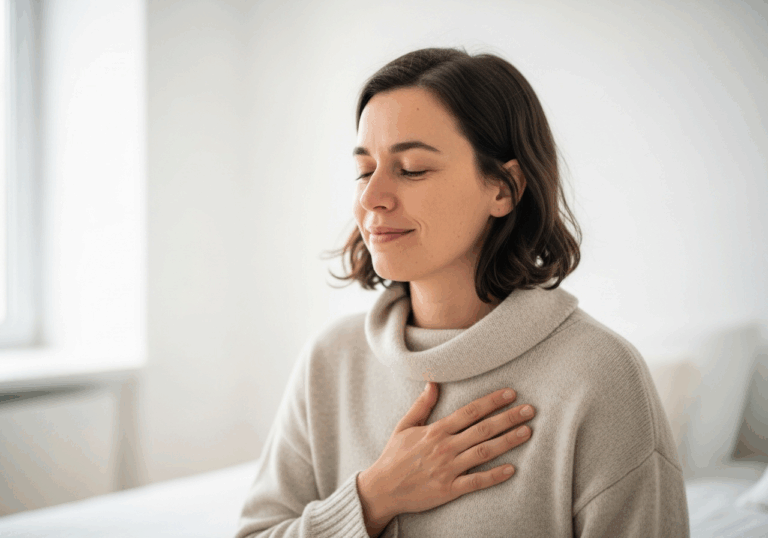
Imagine spending just five minutes a day focusing on a compassionate phrase like “may I be kind to myself.” This small act can create a ripple effect, transforming our emotional landscape and fostering resilience against life’s challenges.
As we navigate the complexities of modern life, embracing self-compassion may be the key to unlocking a more balanced and fulfilling existence.
❓ Frequently Asked Questions ❓
Learn more
What is a self-compassionate phrase?
A self-compassionate phrase is a positive affirmation that encourages kindness towards oneself, such as ‘May I be kind to myself.’ Using such phrases can help reduce anxiety and improve mood.
How long should I practice self-compassion?
Spending just 5 minutes daily on a self-compassionate phrase can significantly calm anxious feelings. Consistent practice can lead to long-term improvements in emotional balance and mental health.
What are the benefits of practicing self-compassion?
Practicing self-compassion can reduce anxiety by approximately 30% and increase positive affect by about 25%. This simple exercise helps cultivate emotional balance and overall well-being.
When is the best time to practice self-compassion?
Incorporating self-compassion exercises into your morning routine can provide consistent benefits throughout the day. This helps set a positive tone for your emotional state.
Can self-compassion exercises be combined with other techniques?
Yes, pairing self-compassion phrases with deep breathing can enhance relaxation and effectiveness. This combination can further calm anxious feelings and promote emotional well-being.
How can I track my progress with self-compassion exercises?
Reflecting on your feelings before and after practicing self-compassion can help you monitor your emotional changes. Keeping a journal can be an effective way to document your progress over time.
Is self-compassion effective for everyone?
While many people experience benefits from self-compassion exercises, individual results may vary. However, research indicates significant positive effects for a broad range of adults.
What does the research say about self-compassion exercises?
Research shows that a brief self-compassion exercise can reduce anxiety by about 30% and increase positive emotions by approximately 25%. These findings highlight the effectiveness of self-kindness in improving mental health.
How often should I practice self-compassion?
Regular practice of self-compassion is recommended for optimal benefits, ideally daily. Consistency can lead to long-term reductions in anxiety and improvements in mood.
What should I do if I find it hard to practice self-compassion?
If you struggle with self-compassion, start by acknowledging your feelings without judgment and gradually introduce positive affirmations. Seeking support from a therapist or counselor can also help you develop this practice.